
Shockwave Therapy for Erectile Dysfunction: What the Research Actually Shows


Part 2 of 2. Part 1 covers the pelvic floor physical therapy side of ED and Peyronie's.
If you're reading this, there's a decent chance you've already done some of the homework.
You know shockwave therapy exists as an option. You've probably read a forum thread, a men's health article, maybe an abstract of a study you didn't fully finish. What you're trying to figure out now is whether the research holds up, and whether it's worth pursuing somewhere real instead of somewhere that just sounds good in an ad. Both are fair questions, and they deserve straight answers.
What Shockwave Therapy Actually Does
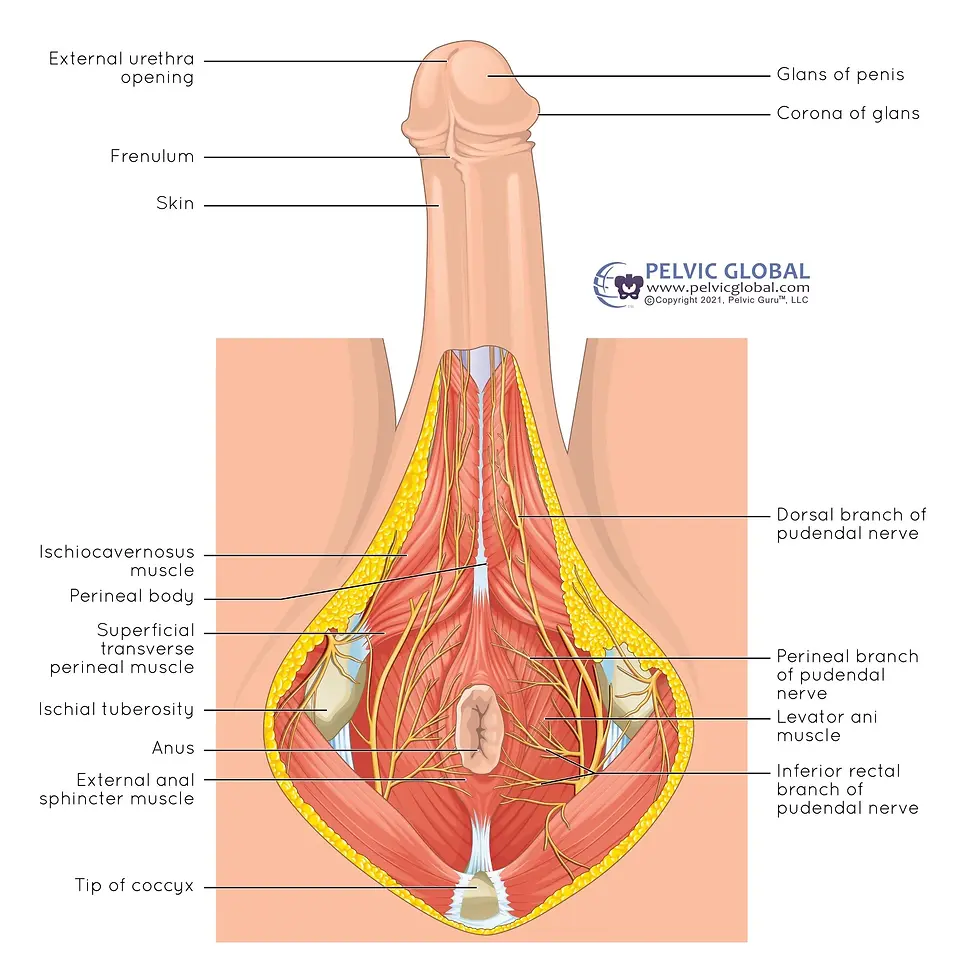
Low-intensity or focused shockwave therapy, delivered through a protocol like GAINSWave, uses focused acoustic pressure waves applied to penile tissue and the surrounding vasculature. This is not the same technology used to break up kidney stones. That's a high-intensity application. This is low-intensity, applied externally, with no needles, no incisions, and no sedation.
The goal is to stimulate angiogenesis, meaning the growth of new blood vessels, and to break down existing microplaque that restricts blood flow. Better blood flow to the tissue is the mechanism behind an erection in the first place, so treatment is aimed at improving the underlying vascular function, not masking the symptom for a few hours.
What the Research Says
GAINSWave's own clinical research bibliography lists specific, named studies, not just a general claim of being research-backed. A few worth knowing about: a 2010 pilot study by Vardi et al. in European Urology followed men with organic ED for six months after treatment. A 2016 double-blind, sham-controlled study by Kitrey et al. in The Journal of Urology found that low-intensity shockwave treatment could shift men who weren't responding to PDE5 inhibitors like Viagra or Cialis into responders. A 2016 study by Bechara et al. in Sexual Medicine followed non-responders to PDE5 inhibitors for twelve months and reported continued safety and results. The most comprehensive summary is a 2017 systematic review and meta-analysis by Lu et al. in European Urology, which pooled the existing randomized trials and concluded low-intensity shockwave treatment improves erectile function.
Most of this research uses the IIEF-5, a standardized index of erectile function, to measure outcomes before and after treatment. Across studies focused on mild-to-moderate vasculogenic ED, improvement rates on the IIEF-5 have ranged from roughly 60 to 80 percent. Men who complete a full protocol most commonly report stronger and more consistent erections, faster arousal, and improved spontaneity. Improvement typically starts to show up between weeks three and six, with continued gains over the following months, and reported effects lasting one to two years for many men before a maintenance session is needed.
That research also comes with real limits worth naming plainly. Results are not universal. Men with severe vascular damage, advanced diabetes, or significant nerve injury tend to respond less than men with mild-to-moderate vasculogenic ED. If your history includes any of those, that's a conversation worth having up front.
Why Men Choose This Over Medication or Injections
Oral medication works for a lot of men, situationally. It doesn't change the underlying vascular issue, it just overrides it for a window of time, and it means depending on a pill indefinitely. Injections work through a different mechanism entirely, and for most men we talk to, they're simply trying to avoid a penile injection.
Shockwave is appealing precisely because it's neither of those things. It's non-invasive, non-pharmaceutical, and aimed at the tissue and vascular function driving the problem, rather than working around it session by session.
It's also worth knowing where shockwave isn't the right starting point. If your ED is tied more to pelvic floor muscle function than to vascular damage, weak or overactive muscles, post-prostatectomy recovery, or pain, Part 1 of this series on pelvic floor physical therapy is likely the better place to start.
Peyronie's Disease and Shockwave: What GAINSWave Itself Says Shockwave is also used for Peyronie's disease, the fibrous scar tissue that causes curvature and pain in the shaft, and it's worth being exactly as direct here as GAINSWave itself is. Shockwave for Peyronie's is currently investigational in the United States, meaning it doesn't carry the same regulatory standing as its use for ED.
The evidence is real, but it isn't even across every outcome. It's strongest for pain relief. Several studies, including a 1999 report by Mirone et al. and a 2005 prospective study by Skolarikos et al., found meaningful pain reduction, often within the first few weeks of treatment. A 2012 randomized trial by Palmieri et al. in the International Journal of Andrology combined daily tadalafil with shockwave in men who had both Peyronie's and ED and found benefit for both conditions together.
Curvature and plaque size are a different story. The evidence there is more mixed, tends to work better the earlier a man is in the disease process, and even researchers in the field have publicly debated it. A 2016 point-counterpoint published in Translational Andrology and Urology argued both sides of whether shockwave has a real place in Peyronie's treatment at all.
If pain is the primary problem, shockwave has real support behind it. If a straighter erection is the primary goal, we'll tell you plainly what the evidence does and doesn't show before you commit to a plan. For men who want a closer look at the research on other modalities for Peyronie's, including therapeutic ultrasound, which has the strongest curvature-reduction data of anything we offer, Part 1 of this series covers that directly.
What Treatment Looks Like at RVA Holistic PT
Shockwave therapy for ED and Peyronie's is delivered at our West End location by trained clinical staff, in the same kind of clinical setting you'd expect from any specialty physical therapy practice, not a pop-up men's health franchise.
Our male pelvic floor shockwave clients start with a $149 intro session, a single treatment that lets you experience the protocol and see how your body responds before committing further. From there, a full protocol is built as a series of sessions based on your specific presentation, since no single session resolves chronic ED or Peyronie's. Packages are cash pay, with full pricing disclosed before you start.
Is This the Right Fit
If you're dealing with mild-to-moderate vasculogenic ED, or Peyronie's-related pain, and you're looking for a non-pharmaceutical option that addresses the underlying issue rather than managing around it, this is worth a real conversation. If you're expecting a one-visit fix, or if your history includes significant vascular, diabetic, or nerve-related complications, we'll tell you that plainly at your intro visit so you're deciding with accurate information.
If you're ready to look into it, reach out through our contact form and our team will get you scheduled. There's nothing you'll need to explain that we haven't heard before.
Kelley Ryan, PT, DPT, WCS, PCES
RVA Holistic PT
References
Lu Z, Lin G, Reed-Maldonado A, Wang C, Lee YC, Lue TF. Low-intensity Extracorporeal Shock Wave Treatment Improves Erectile Function: A Systematic Review and Meta-analysis. Eur Urol. 2017;71(2):223-233.
Vardi Y, et al. Can Low-Intensity Extracorporeal Shockwave Therapy Improve Erectile Function? A 6-Month Follow-up Pilot Study in Patients with Organic Erectile Dysfunction. Eur Urol. 2010.
Kitrey ND, et al. Penile Low Intensity Shock Wave Treatment Is Able to Shift PDE5i Nonresponders to Responders: A Double-Blind, Sham Controlled Study. J Urol. 2016.
Bechara A, et al. Twelve-Month Efficacy and Safety of Low-Intensity Shockwave Therapy for Erectile Dysfunction in Patients Who Do Not Respond to Phosphodiesterase Type 5 Inhibitors. Sex Med. 2016.
Palmieri A, et al. Tadalafil once daily and extracorporeal shock wave therapy in the management of patients with Peyronie's disease and erectile dysfunction: results from a prospective randomized trial. Int J Androl. 2012;35(2).
Mirone V, et al. Our Experience on the Association of a New Physical and Medical Therapy in Patients Suffering from Induratio Penis Plastica. Eur Urol. 1999.
Skolarikos A, et al. Shockwave Therapy as First-Line Treatment for Peyronie's Disease: A Prospective Study. J Endourol. 2005;19(1).
Chung E. Pro: does shockwave therapy have a place in the treatment of Peyronie's disease? Transl Androl Urol. 2016.
Alkhayal S, et al. Con: does shockwave therapy have a place in the treatment of Peyronie's disease? Transl Androl Urol. 2016.
This content is educational and not a substitute for individualized medical evaluation. Results vary by patient, and a full history should be reviewed before starting treatment.


Comments